Skip to content

Software Defined Vehicle Architecture

mm Sarah Mitchell 9 min read
TL;DR

Key Insights

  • Zonal architectures reduce wiring harness weight from 25 kg to 60 kg, cutting copper length and improving manufacturability.

  • Centralized compute platforms enable mixed-criticality computing with safety-certified partitions and hardware security modules for trust separation.

  • BMW Neue Klasse, Mercedes MB.OS, and Toyota Arene exemplify platform-centric strategies treating vehicles as software product lines.

  • Successful SDV transformations follow staged rollouts: hardware abstraction, domain consolidation, zonal controllers, centralized compute, then fleet operations.

  • The decisive capability is software continuity: carrying validated cores forward while extending them without destabilizing the fleet or compliance.

Once a vehicle's value was locked into mechanical assemblies and fixed-function electronics. Now, differentiation is increasingly delivered through software that can be updated, validated, and monetized over a platform life measured in years. The architectural shift is visible everywhere: fewer, more capable compute nodes; high-speed in-vehicle networks; and a development pipeline that treats the car as a continuously evolving system rather than a one-time product release.

The reason the industry is forcing this transition is not aesthetic—it's arithmetic. Modern cars run roughly 100 million lines of code and orchestrate a network of between 70 and 100 electronic control units. That scale breaks the traditional approach of stitching functions together from dozens of independent boxes, each with its own supplier cadence and constraints. Complexity has become the enemy of quality, cost, and speed.

When every feature touches multiple ECUs and multiple buses, even minor changes expand into a regression-testing problem that can dominate engineering capacity. This is where software defined vehicle architecture trends have hardened into a practical roadmap. The first wave consolidated ECUs into domain controllers for infotainment, ADAS, body, and powertrain connected by gateways.

The next wave is pushing into zonal architectures, where the vehicle is partitioned by physical location—front left, front right, rear, cabin—and each zone aggregates sensors and actuators locally. Central compute then runs the software that interprets those signals and commands the actuators, while the zones handle power distribution, signal conditioning, and deterministic I/O. The move is not merely about fewer boxes; it's a change in what the boxes do.

Zonalization also rewrites the materials problem in ways that mechanical and manufacturing teams can quantify. Wiring harness mass is a hidden tax on range, cost, and assembly time, and it compounds across global production. Average wiring weight per vehicle is around 25 kg, and it can rise to as much as 60 kg for some luxury models.

A zonal harness strategy—short local runs to a zone controller, plus a smaller number of high-bandwidth trunks—reduces copper length, connector count, and routing complexity. That shows up not only in mass reduction but in improved manufacturability: fewer part variants, simpler kitting, and less rework risk in high-mix assembly plants.

Under the hood, the SDV shift is anchored by a centralized compute platform architecture: a small number of high-performance computers that can host multiple domains as software workloads. The implication is mixed-criticality computing—infotainment and cockpit UX sitting alongside safety-relevant functions—without allowing a failure in one to destabilize the other.

In practice this drives adoption of virtualization, microkernel or safety-certified OS partitions, and hardware security modules to separate trust zones. Many OEMs are converging on a layered stack: a safety-certified base for real-time and instrument cluster workloads, and Linux-based environments for application-rich domains. The industry's architectural center of gravity is shifting from ECU-by-ECU integration to platform governance.

Regulatory Compliance as Architecture Driver

UNECE regulations on cybersecurity and software updates changed the rules by binding lifecycle practices to type approval

Governance and Lifecycle Discipline

Regulation is the forcing function that makes governance non-negotiable. UNECE regulations on cybersecurity (UN R155) and software updates (UN R156) changed the rules by binding software lifecycle practices to type approval. In the European Union, R155 becomes mandatory for all new vehicle types from July 2022 and mandatory for all new vehicles produced from July 2024; R156 similarly formalizes software update and software update management expectations. The practical consequence is that an SDV program must be engineered as a compliance system: traceability from requirements to code; controlled update release processes; incident response and monitoring; and an auditable software bill of materials discipline that extends across suppliers.

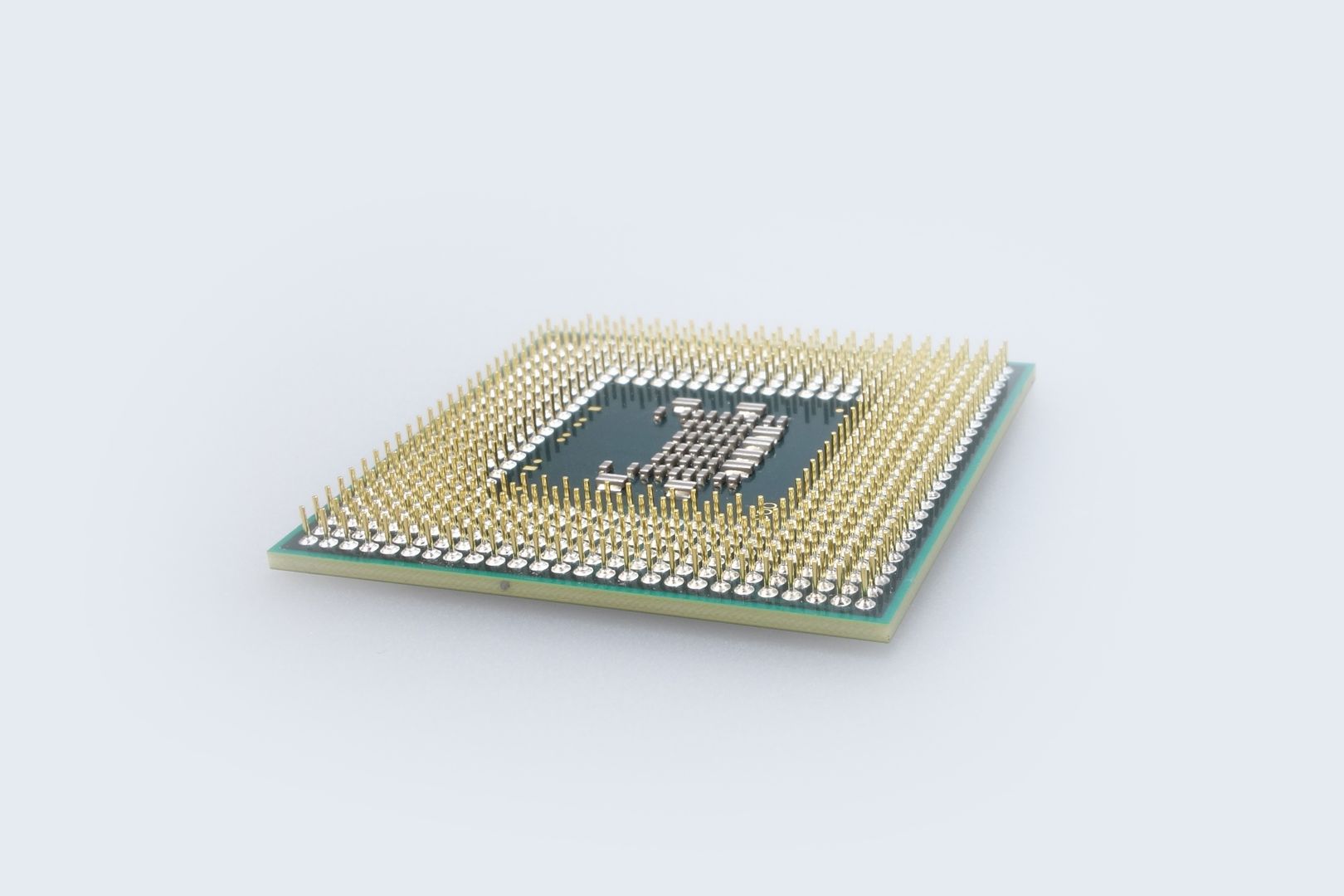
High performance computing unit for software defined vehicle
Centralized compute platforms enable mixed-criticality computing with safety-certified OS partitions and hardware security modules

The most useful way to define a software defined vehicle platform is not a car with OTA updates, but a stable hardware and middleware foundation that supports software continuity across multiple vehicle programs. BMW has described its Neue Klasse direction explicitly in these terms, highlighting a zonal architecture paired with high-performance computing units it calls Superbrains, designed to make continuous enhancement possible on a stable software platform.

Mercedes-Benz has taken a similarly platform-centric stance with MB.OS, first introduced on the new CLA generation that premiered in 2025. Toyota, through Woven by Toyota, has positioned Arene as a unified software development platform and confirmed deployments beginning with vehicles scheduled for launch within fiscal year 2025. These are not identical strategies, but they all treat the vehicle as a software product line.

The industry's trajectory also makes a previously uncomfortable statement increasingly true: centralized platforms replace distributed control. That does not mean every actuator is driven directly from a single processor with no local intelligence; it means the design intent changes. Instead of distributing features across dozens of ECUs, teams distribute I/O and power locally while consolidating compute and decision-making into fewer nodes.

The payoff is software reuse, simpler integration paths, and the ability to roll out cross-domain capabilities—energy management, thermal optimization, automated driving behaviors, cabin personalization—without tearing up the architecture each time. There are, however, hard engineering trade-offs that separate plausible SDV architectures from slideware.

Determinism and latency budgets matter more in a centralized model: if brake or steering-related functions share compute resources with non-critical workloads, scheduling, isolation, and real-time guarantees must be engineered from day one. Network design becomes a safety topic rather than an IT topic—Ethernet backbones, time-sensitive networking concepts where applicable, and gateway strategies that avoid creating single points of failure.

And thermal design tightens: consolidating compute raises power density and makes enclosure materials, heat spreading, and under-hood placement decisions strategic. The materials choices behind housings, connectors, and harness routing increasingly influence software capability because compute cannot be always on if it cannot be cooled reliably.

The most successful SDV programs in 2026 tend to follow a staged transformation rather than a single big bang rewrite. First, teams standardize the hardware abstraction layer and diagnostics, creating a consistent way to talk to sensors, actuators, and network services across programs.

Second, they consolidate ECUs into domains and define service interfaces, often adopting service-oriented patterns so features can be composed without tight coupling. Third, they introduce zonal controllers to simplify wiring and shift I/O closer to the edge, while validating power distribution and EMC behavior under real production constraints.


Practical Implementation and Supplier Ecosystem

How OEMs are translating the concept into concrete compute topologies and supplier partnerships

Renault Ampere SDV Platform

Resilient SDV Program Checklist

  • Zonal boundary definition that matches physical packaging reality
  • Ethernet backbone strategy with clear latency and redundancy targets
  • Safety partitioning plan for mixed-criticality compute
  • Cybersecurity management aligned to UN R155 expectations
  • Software update management aligned to UN R156 processes
  • Toolchain traceability from requirements to deployment artifacts
  • Supplier interface contracts that include update and vulnerability duties
  • Fleet operations plan: telemetry, rollout control, and rollback discipline

The supplier ecosystem is adapting in parallel, and this is where implementation quality is won or lost. Silicon vendors now ship automotive-grade compute designed for consolidation, while operating system providers and middleware stacks compete on mixed-criticality support. Open collaboration bodies such as COVESA (formerly GENIVI, rebranded in 2021) have continued to focus on reference approaches for integrating in-vehicle and cloud systems.

These include data exchange models that make it easier to build cross-brand software services. Meanwhile, OEMs are increasingly explicit about what they expect from partners: not an ECU, but a software component with a defined interface, a security posture, update compatibility, and long-term maintenance commitments.

If there is a single mistake repeated across SDV transformations, it is over-investing in the center computer and under-investing in system discipline. Zonal architectures are not just new wiring diagrams; they change failure modes, serviceability, and test strategies. A centralized compute platform is not just a faster ECU; it is a governance model.

The organization must be structured to own platform decisions across vehicle lines, otherwise every program will fork the stack and the benefits of reuse evaporate. Even performance tuning becomes a cross-functional exercise: compute scheduling and network load interact with power draw, which interacts with thermal limits, which interacts with enclosure materials, sealing strategy, and long-term aging.

The SDV opportunity, in 2026, is clearer than the hype cycle suggests. It is the chance to convert complexity into a managed asset: a software-defined vehicle architecture that makes features composable, compliance auditable, and hardware scalable. It also enables an efficiency story that manufacturing leaders can defend with numbers: less copper, fewer part variants, simplified assembly, and a pathway to reduce requalification churn across refresh cycles.

The winners will be the teams that treat architecture as an industrial system—compute, network, software lifecycle, cybersecurity, and materials all engineered as one. The next two years will not be decided by who announces the boldest SDV vision, but by who ships stable platform releases at scale, across multiple models, under tightening cybersecurity and software-update expectations.

The decisive capability is software continuity: the ability to carry a validated core forward, extend it without destabilizing the fleet, and keep the vehicle compliant while it evolves. When that becomes routine, the SDV stops being a program and becomes the company's operating model.

Automotive zonal architecture wiring harness diagram
Zonal controllers simplify wiring harness design and reduce copper weight while improving manufacturability across global production

The Industrial Reality of SDV

Converting complexity into a managed asset with compute, network, lifecycle, cybersecurity, and materials engineered as one

Fourth, they deploy centralized compute with clear safety partitioning, cyber trust boundaries, and a release pipeline that supports frequent updates. Fifth, they industrialize operations: fleet telemetry, anomaly detection, staged rollouts, rollback strategies, and post-update verification that proves the car remains within homologation limits.

Renault's Ampere effort is a good example of how OEMs are translating the concept into a concrete compute topology. Ampere has described an SDV approach based on a single platform with a centralized software architecture and an intelligent operating system designed to control, analyze, and upgrade vehicle functions.

It has also explained centralization through two main computers—a Power Computing Unit and a Cockpit Domain Controller—for its first SDV platform planned for 2026 deployment in light commercial vehicles. This dual-compute split is a practical compromise: keep cockpit workloads and user-facing evolution fast, while preserving a robust base for vehicle functions and cybersecurity supervision.

The supplier ecosystem is adapting in parallel, and this is where implementation quality is won or lost. Silicon vendors now ship automotive-grade compute designed for consolidation, while operating system providers and middleware stacks compete on mixed-criticality support.

Open collaboration bodies such as COVESA have continued to focus on reference approaches for integrating in-vehicle and cloud systems, including data exchange models that make it easier to build cross-brand software services. Meanwhile, OEMs are increasingly explicit about what they expect from partners: not an ECU, but a software component with a defined interface, a security posture, update compatibility, and long-term maintenance commitments.

A practical checklist that separates resilient SDV programs from fragile ones is surprisingly consistent across brands. It includes zonal boundary definition that matches physical packaging reality, Ethernet backbone strategy with clear latency and redundancy targets, safety partitioning plan for mixed-criticality compute, cybersecurity management aligned to UN R155 expectations, software update management aligned to UN R156 processes, toolchain traceability from requirements to deployment artifacts, supplier interface contracts that include update and vulnerability duties, and fleet operations plan covering telemetry, rollout control, and rollback discipline.

mm

Sarah Mitchell

Automotive Industry Analysts

Materials science specialist and automotive design consultant analyzing innovative manufacturing processes and lightweight materials. Contributor to industry research on sustainability and production efficiency.